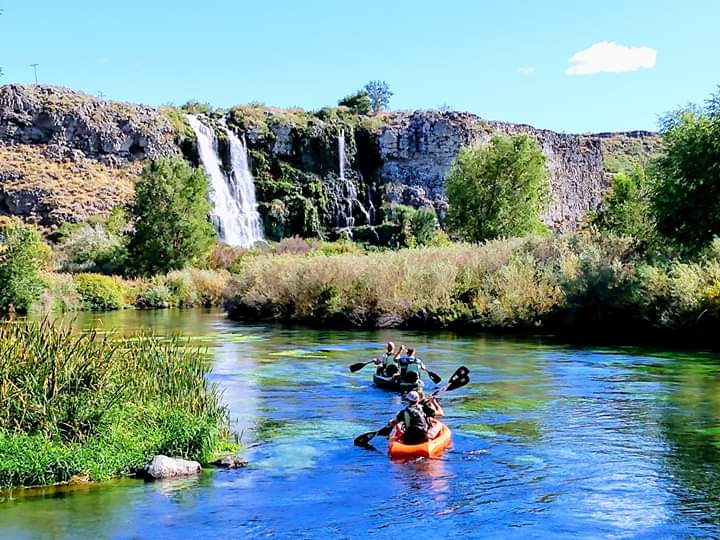
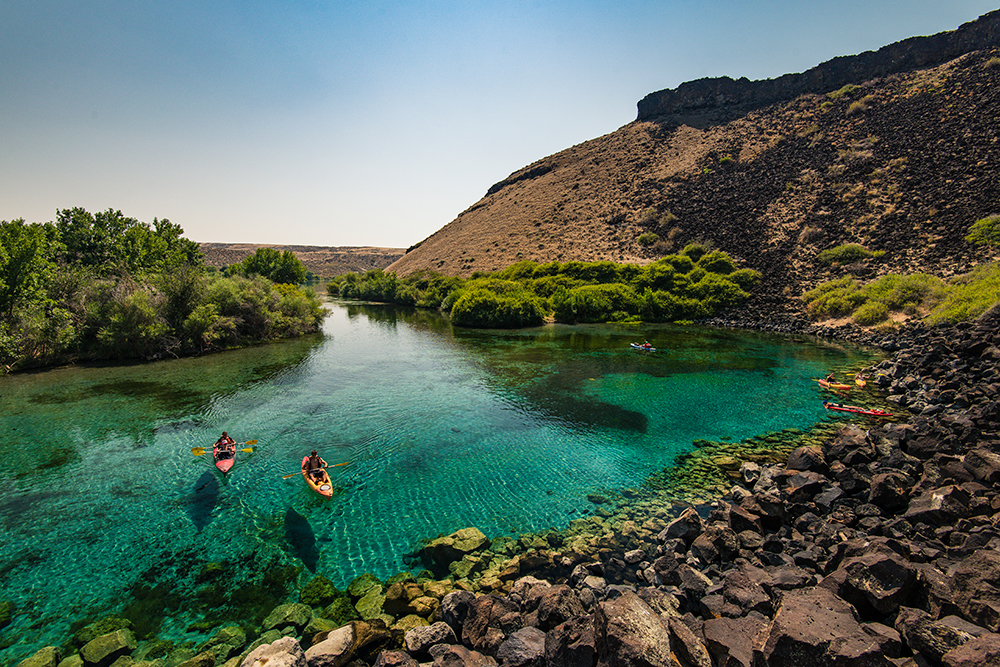
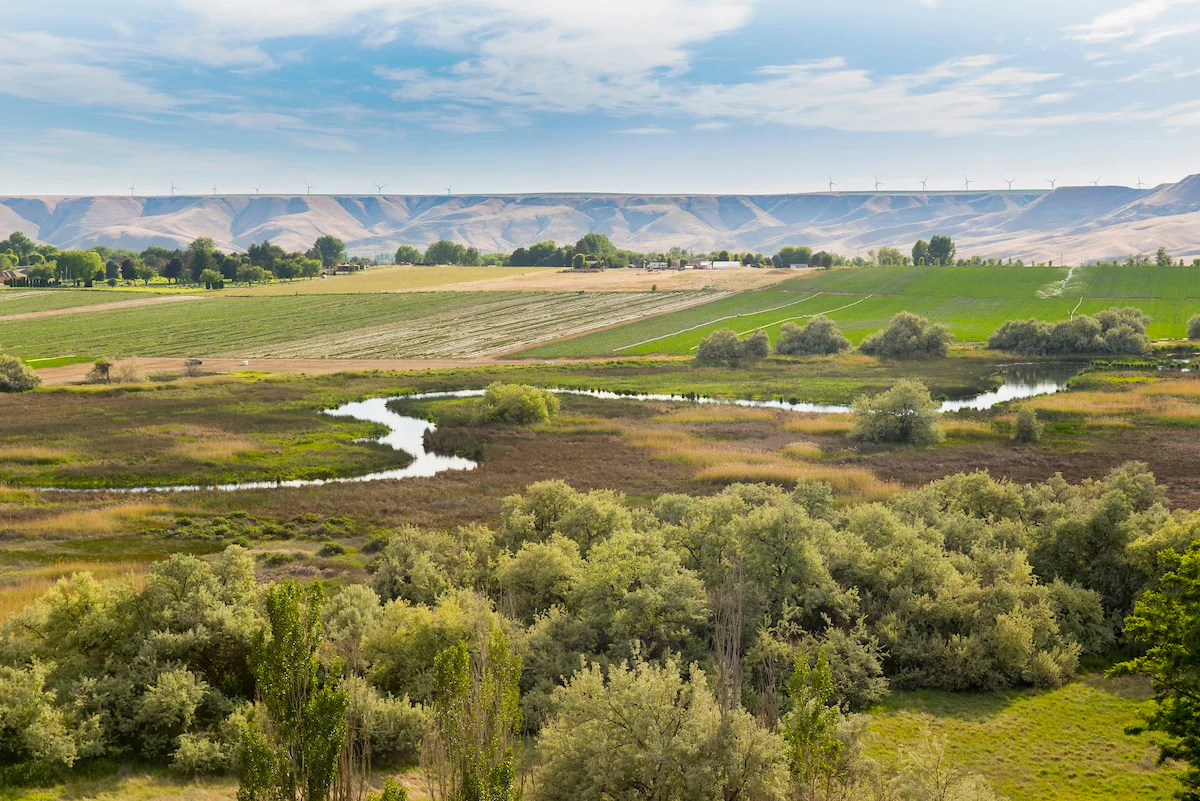
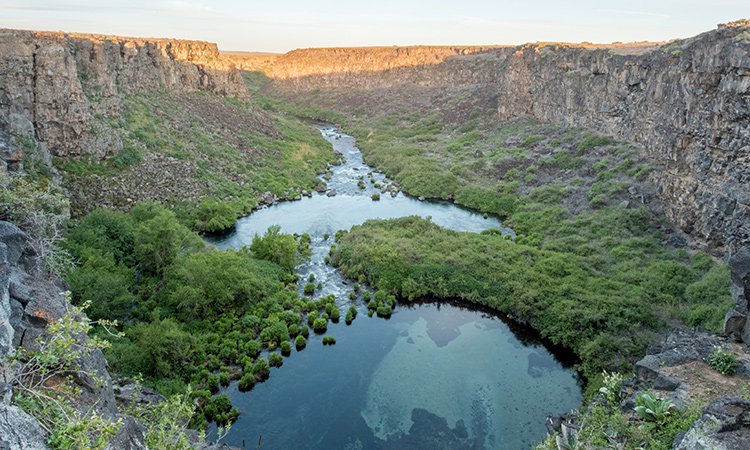
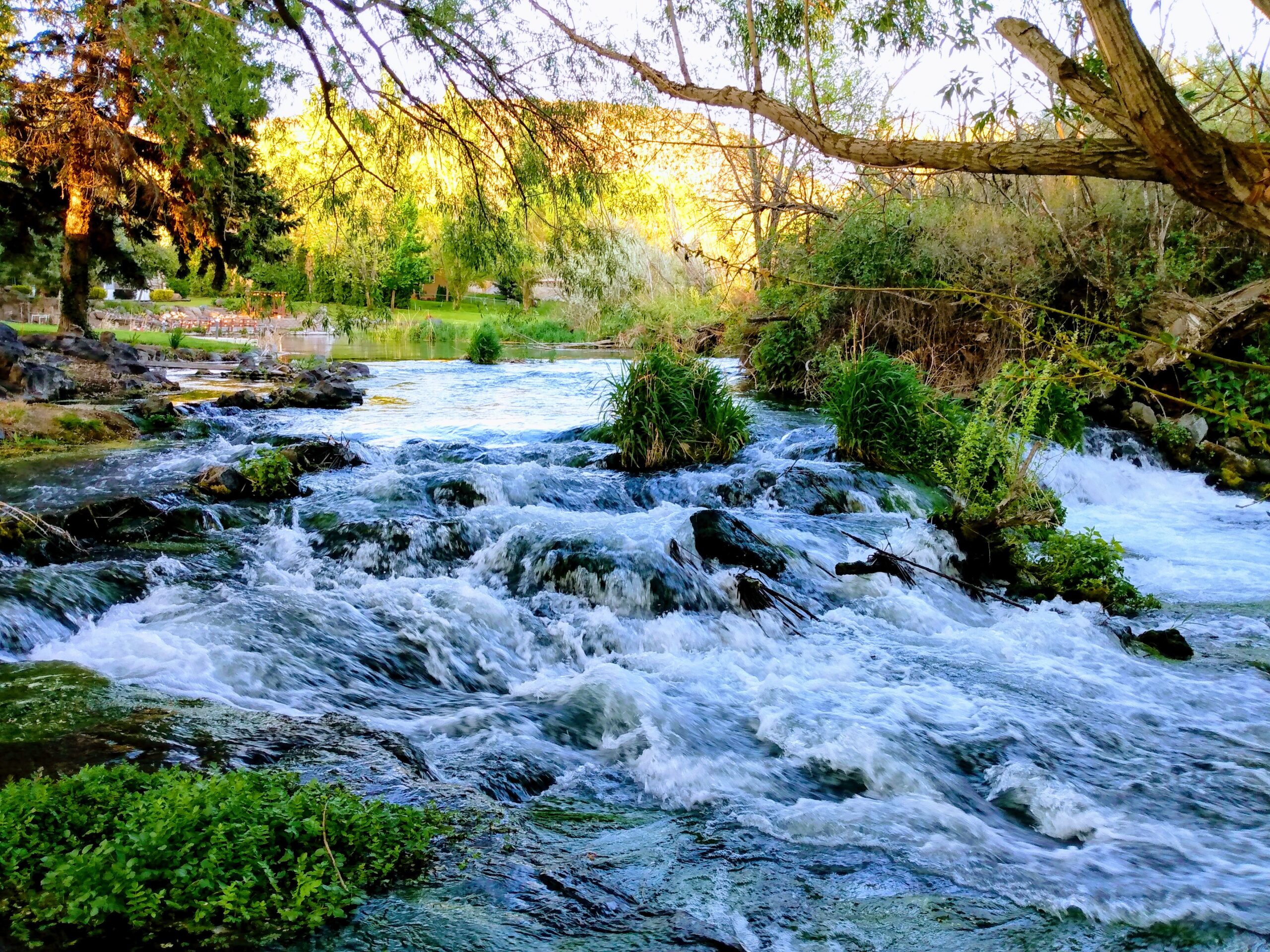
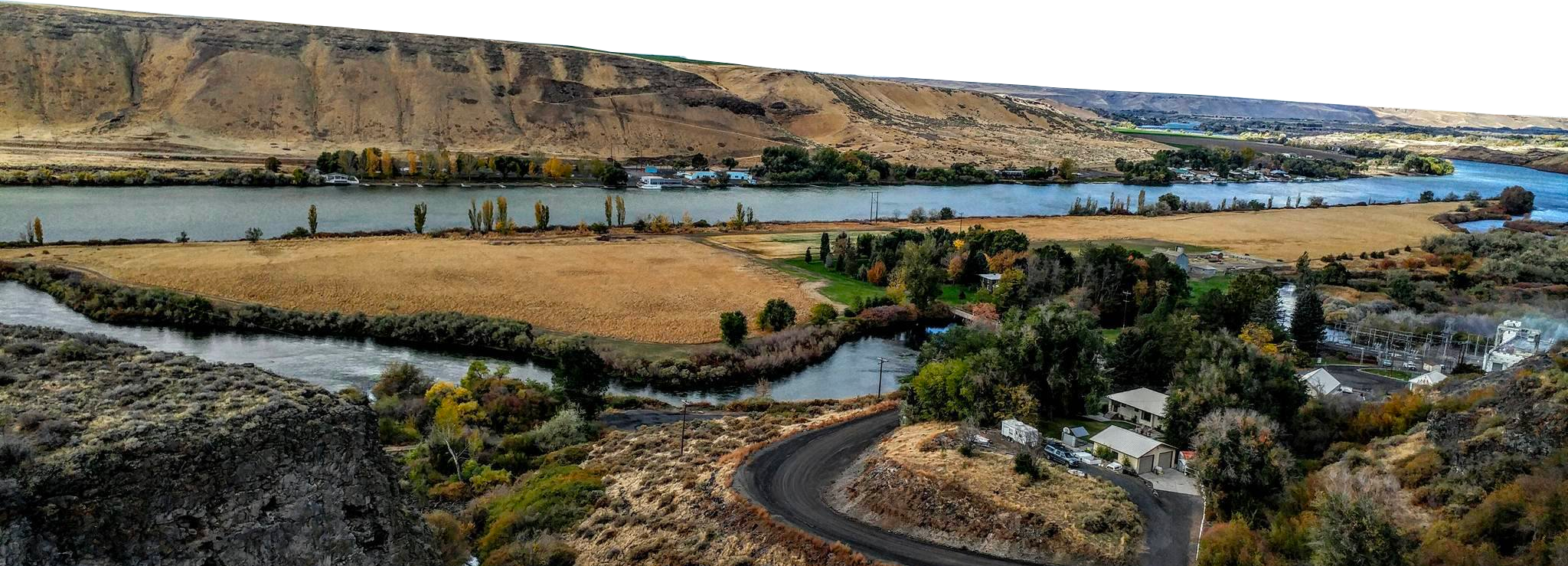
The Hagerman Valley was formed 15,000 years ago by the Bonneville  flood which gouged out canyons, moved house-sized boulders and left enormous sand bars. The Valley's unique landscape is dotted with innumerable, rounded, "rock melons", some the size of an automobile. These large gravels bear silent testimony to the colossal flood that shaped and deposited them. The Valley is a land of hot and cold running water. Hot springs produce warm water that can soothe your aching muscles and cold springs gush water a perfect temperature for raising trout. The volcanic lava flows, deep box canyons, fossil beds, mine diggings and vast rock formations tell the story of days gone by. Here you will see the canyon of the mighty Pohogawa, the River of the Sage Plain, as the Indians called the Snake River. You can experience its rapids, whirlpools, waterfalls and associated wildlife. It is a land of melon farming, water-fowl and deer hunting and fishing for trout. It is a land of hot summers and mild winters; a land that through the years  has been home to the indian, the emigrant, the settler, and the farmer and rancher.

"The Valley of the Thousand Springs" is one of those rare natural rest stops that has been serving travelers for hundreds, perhaps thousands of years. The mild, almost snowless winters, hot springs and natural fisheries provided by the clear flow of springs at a constant 58 degrees made the valley a favorite Indian wintering area.
The City of Hagerman, which gives the valley its name, was originally the site of a stagecoach stop (Overland Trail Route) along the Oregon Trail. Remains of this historic pioneer route can still be seen along the west side of the Snake River.
The town itself was officially established in 1892 when Stanley Hageman and Jack Hess opened a combination Post Office/General Store. The town was actually named for Stanley Hageman but a misspelling in the central post office registry changed its official name to Hagerman.
There was only one store in Hagerman in 1893, when Billy Coltharp established his saloon, originally a barrel of whiskey and a tin cup. Billy lived in two small rooms in the rear of the saloon he built (now the Masonic Hall). He also built the original part of the old Morris Roberts store (now the US Bank). He established the park, which today bears his name and built the Park Opera House (now the American Legion Hall). Billy also helped organize the Hagerman State Bank (located in a corner of the Morris-Roberts Store) and served as its director. This bank later became the National Bank and moved to a new building in 1909 (now the Historical Society Museum). Billy also served as director there.
Today, the valley is the largest producer of commercial trout in the world. The mild climate and abundance of year round open water make the valley a preferred stop-off for migrating waterfowl. This same abundance of water also provides numerous water sport opportunities.
The Hagerman Valley is a tourist's wonderland and a sportsman's dream. The area is also rapidly becoming known as an ideal retirement spot because of its climate, beautiful scenery, diverse recreational opportunities and comfortable small town atmosphere.
Sign InView Entries
email me
Click for Hagerman, ID Forecast